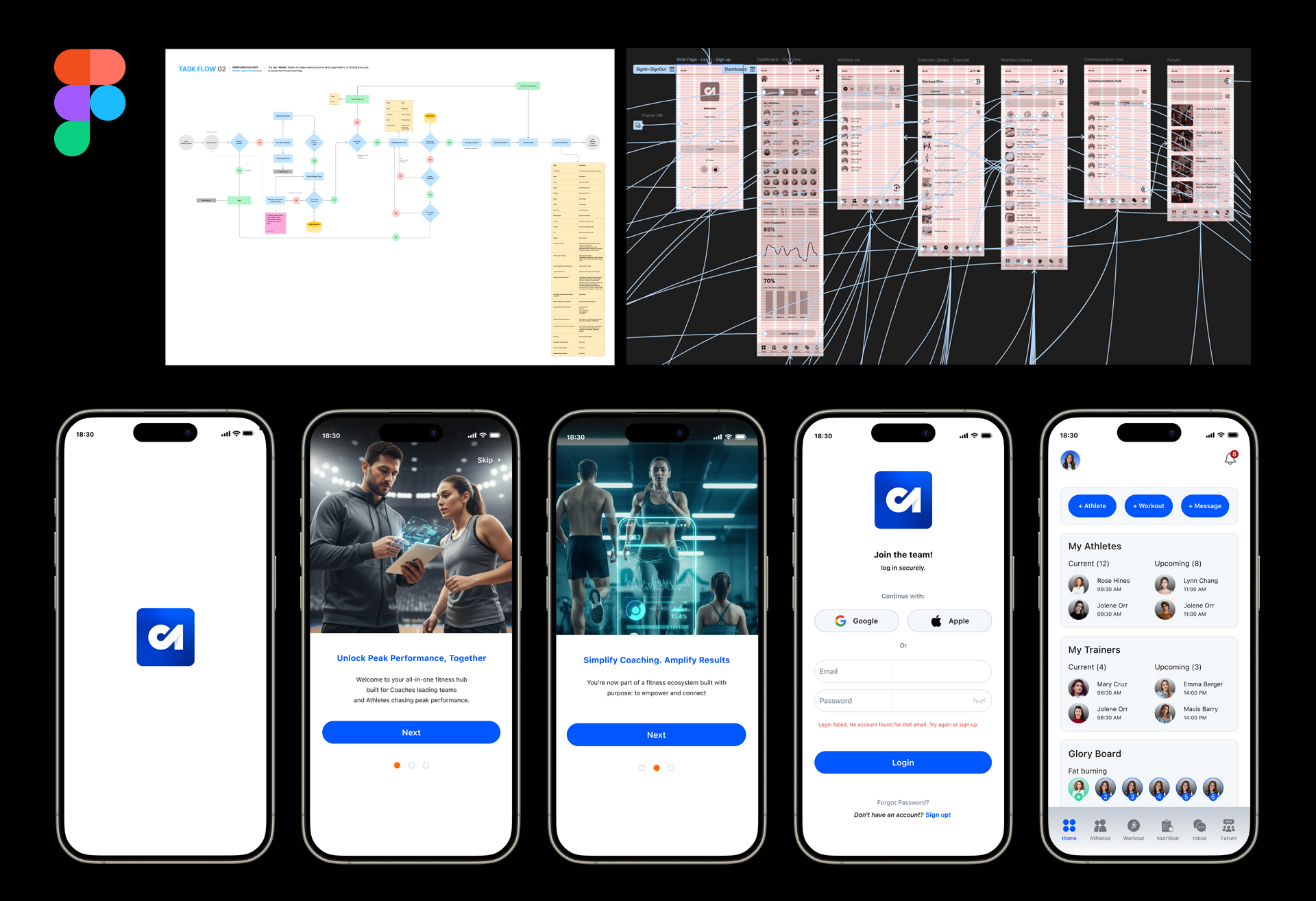
Designing and building intuitive digital products. I combine user-centered design (UX/UI) principles with a deep understanding of front-end feasibility and visual strategy to deliver exceptional, high-impact user journeys.
The Sport Coach Assistant App (which I named Coach Me) was developed as an individual final project during my study at BrainStation, providing an opportunity to apply comprehensive product design methodologies.
Sport Coaches frequently work with numerous participants on a monthly basis. Managing individual exercise programand nutrition plans, can become overwhelming and challenging without the right tools.
How can they efficiently manage and monitor each athlete’s performance,needs and progress?
![[digital project] image of a complete branding project (for a web design agency)](https://cdn.prod.website-files.com/6886e306c66e32973bb77f05/6937bf77187e843cb203d035_download.jpg)
How might we empower sport coachesto effortlessly manage and monitor individual athlete programs, nutrition, andprogress, even with a high volume of participants, so they can focus more oncoaching?
We believe that most coaches want a seamless,accessible way to track and support their participants-anytime, anywhere. Thisassumption needs to be validated through user research (e.g., interviews,surveys) to confirm its accuracy and ensure the design truly meets user needs.
Imagine an app designed specificallyfor sports coaches. A powerful assistant that centralizes their tasks,streamlines communication and simplifies progress tracking.
This kind of too lcould be a game-changer for coaches who manage many participants by centralizingtheir tasks, streamlining communication and helping with performance tracking.
Easy Plan Builder:
I moved beyond generic templates by creating a streamlined system that allows coaches to rapidly create and customize highly individualized exercise and nutrition plans. This includes detailed exercises with images/videos, corrective exercises, and comprehensive nutritional content (calories, macros, alternatives).
This directly addresses a core pain point, as 8 out of 10 coaches interviewed reported spending an average of 6-8 hours per week managing program data manually across multiple spreadsheets.
Dynamic Adaptation:
Unlike static plans, CoachMe enables quick, real-time adjustments based on athlete feedback, progress data, and adherence levels. If an athlete reports pain, drops in energy, or struggles with adherence, the coach can immediately modify their program within the app, ensuring plans are always optimized.
Efficient Data Entry:
Coaches can input, organize, and access all athlete programs and history from one central dashboard, eliminating the need to juggle paper notes, spreadsheets (like Google Sheets), and multiple communication apps.
Holistic Athlete Profiles:
I designed each athlete profile to be a dynamic, centralized hub, encompassing physical metrics (weight, measurements, body composition from InBody tests), performance data, injury history, sleep, and stress levels. This unified view was essential because my research indicated that 90% of coaches rely on 3 or more separate apps and devices, leading to data fragmentation and unreliable analysis.
Visual Progress Reports:
The app transforms raw data into clear, actionable visual reports, charts, and comparative analyses (e.g., before/after photos). This allows coaches and athletes to effortlessly track progress, identify trends, and understand the precise impact of their efforts, directly addressing their frustrations with accurately attributing results.
Automated Monitoring & Alerts:
I implemented custom notification settings for athlete check-ins, progress milestones, or potential issues (e.g., consistent non-adherence). This feature ensures coaches maintain crucial oversight without the need for constant manual vigilance, freeing up their time for higher-value coaching activities.
Integrated Communication Hub:
All interactions, including plan delivery, daily check-ins, feedback requests, and motivational messages, occur within the app. This eliminates fragmented communication across external platforms, ensuring all coaching dialogues are organized and easily accessible. This integrated approach was a direct response to coach feedback; 70% of surveyed coaches cited fragmented communication across third-party apps (WhatsApp, Telegram) as their biggest time sink.
Multimedia Support:
Coaches can upload and share instructional videos for exercises, audio files for nutritional guidance, and motivational content directly within the athlete's plan, ensuring clarity and consistent understanding.
Athlete Engagement Tools:
Features like personalized checklists, goal setting, progress sharing, and even potential community features foster accountability and a sense of shared journey, directly tackling issues of motivation and adherence.
While individual apps might offer pieces of this puzzle (e.g., nutrition tracking, workout logging, messaging), CoachMe stands out by providing a seamless, interconnected ecosystem tailored specifically to the multifaceted workflow of a professional coach. It's not just a collection of features; it's an intelligent coaching assistant that learns from data, simplifies complex tasks, and empowers coaches to provide an unparalleled level of personalized care and accountability to their athletes.
Its uniqueness lies in its ability to holistically manage the coach-athlete relationship from program inception to long-term progress, eliminating administrative overhead and allowing coaches to focus on what they do best: coaching.

![[modern tech interface]](https://cdn.prod.website-files.com/6886e306c66e32973bb77f05/69332c29c63f18ca1a90b396_befca6c8-9487-4990-882f-b4ba4740fc4c.avif)

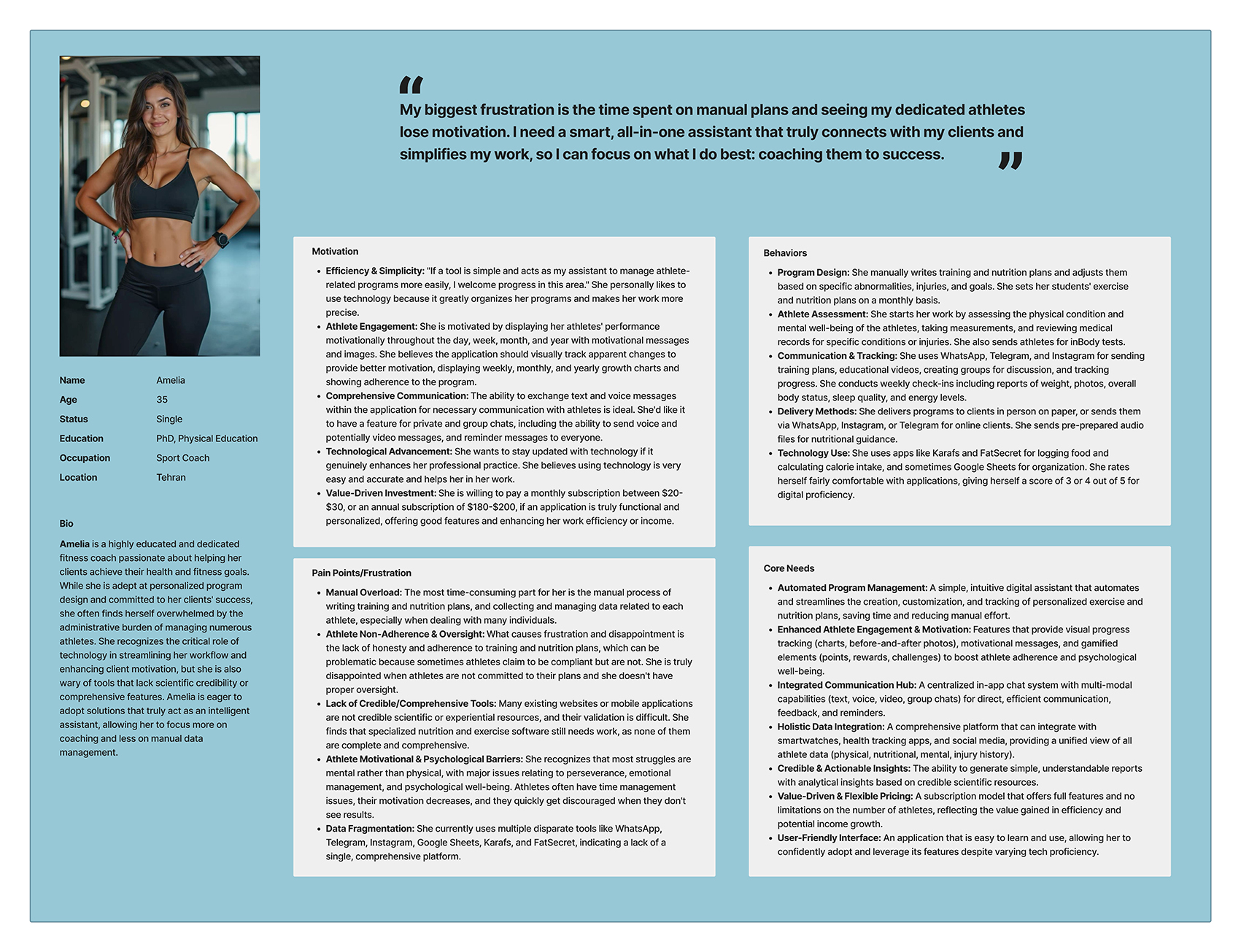
My design strategy was grounded in robust qualitative and quantitative data gathered during the discovery phase.
I personally conducted in-depth interviews with 10 professional fitness coaches and distributed a supplementary survey focusing on their current workflow pain points, adherence challenges, and willingness to invest in a dedicated digital platform. These findings directly informed the app's core features.
Streamlining Coach Workflow: The Demand for Automated & Comprehensive Program
Coaches are critically underserved by existing manual and fragmented systems for creating, tracking, and adjusting personalized athlete programs, driving a strong demand for a simple, comprehensive, and automated digital assistant to enhance efficiency and scale their work.
Boosting Athlete Adherence: The Power of Visual Progress & Gamified Motivation.
The core challenge in athlete adherence is psychological commitment and sustained motivation, leading coaches to seek integrated application features such as visual progress tracking, motivational messages, gamification (points/rewards), and challenge groups to actively engage athletes and provide continuous positive reinforcement for their efforts.
Enhancing Coach-Athlete Connection: The Need for Integrated In-App Communication.
Coaches prioritize seamless, multi-modal in-app communication (text, voice, video, group chats) with athletes to provide timely feedback, reminders, and address adherence issues, moving beyond current reliance on external messaging platforms to centralize support and oversight.
The Quest for a Unified Platform: Holistic Data Management & Seamless Integrations.
There is a significant unmet need for a comprehensive, scientifically credible application that either integrates seamlessly with social media and health tracking devices (smartwatches, nutrition apps) or consolidates diverse data points (physical, mental, nutritional, injury history) into a single, reliable platform to provide a holistic view of each athlete.
Valued Investment: Coaches' Willingness to Pay for Effective Digital Solutions.
Fitness coaches, despite varying levels of digital proficiency, are receptive to adopting new technology and are willing to invest in a paid subscription model (typically $20-30/month per coach or per athlete, or $180-200 annually) for a robust, feature-rich, and efficient application that clearly demonstrates value by simplifying their work and enhancing their income potential.

This information architecture defines the structural foundation of the Sport Coach Assistant App, mapping out how coaches navigate key features such as athlete management, personalized workout and nutrition plans, performance tracking, communication tools, and scheduling. The IA is designed to create a clear, intuitive flow that supports fast access to essential data, reduces cognitive load, and streamlines daily coaching tasks.
By organizing the app’s core functions into a logical hierarcpersonalized workout and nutrition planshy, this IA ensures a seamless user experience for coaches working with multiple athletes and dynamic training needs.

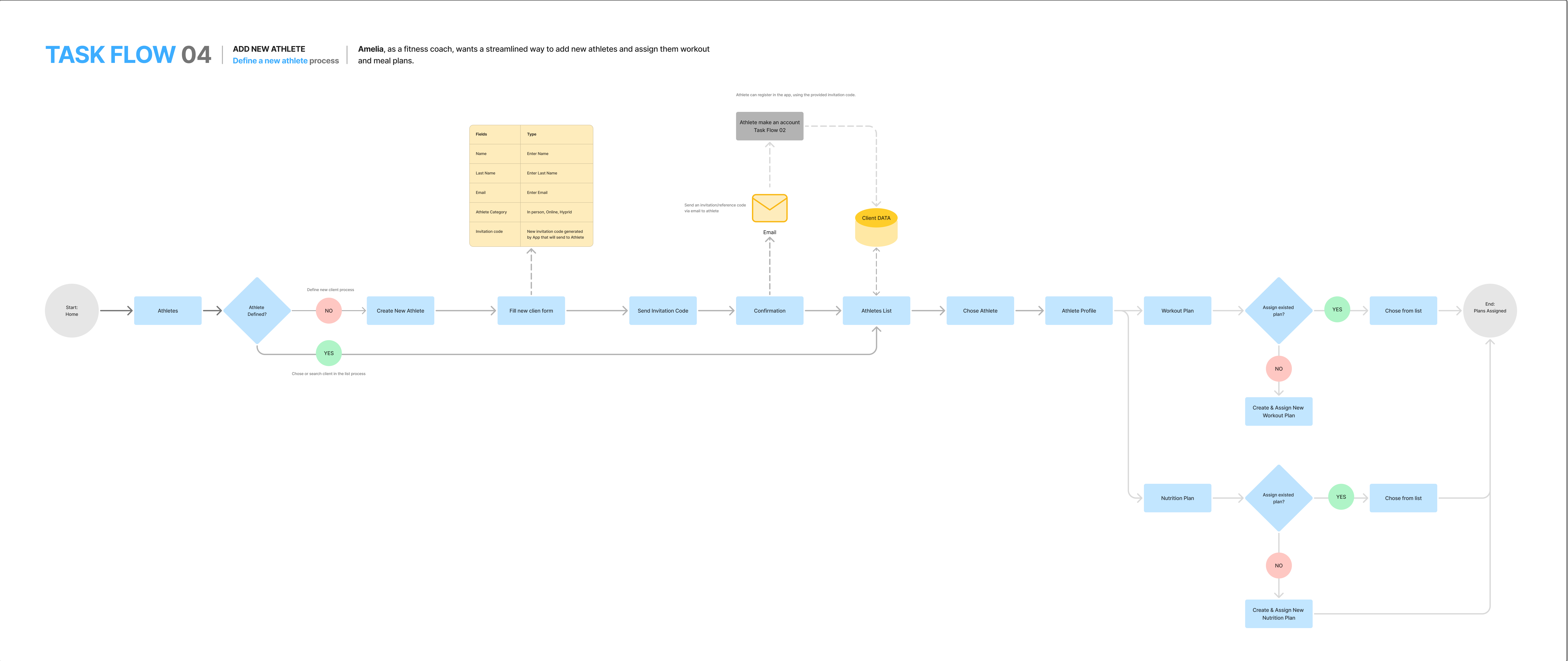
This task flow illustrates the end‑to‑end process a coach follows to add a new athlete to the Sport Coach Assistant App. It begins with creating a new athlete profile, generating and sending an invitation code, and collecting essential client information. Once the athlete joins the app, the coach can immediately assign existing workout and nutrition plans or create new ones tailored to the athlete’s needs.
The flow highlights two key pathways—selecting from existing plans or building new ones, ensuring flexibility for both quick onboarding and personalized program creation. This structure supports a smooth, efficient onboarding experience for coaches managing multiple clients.
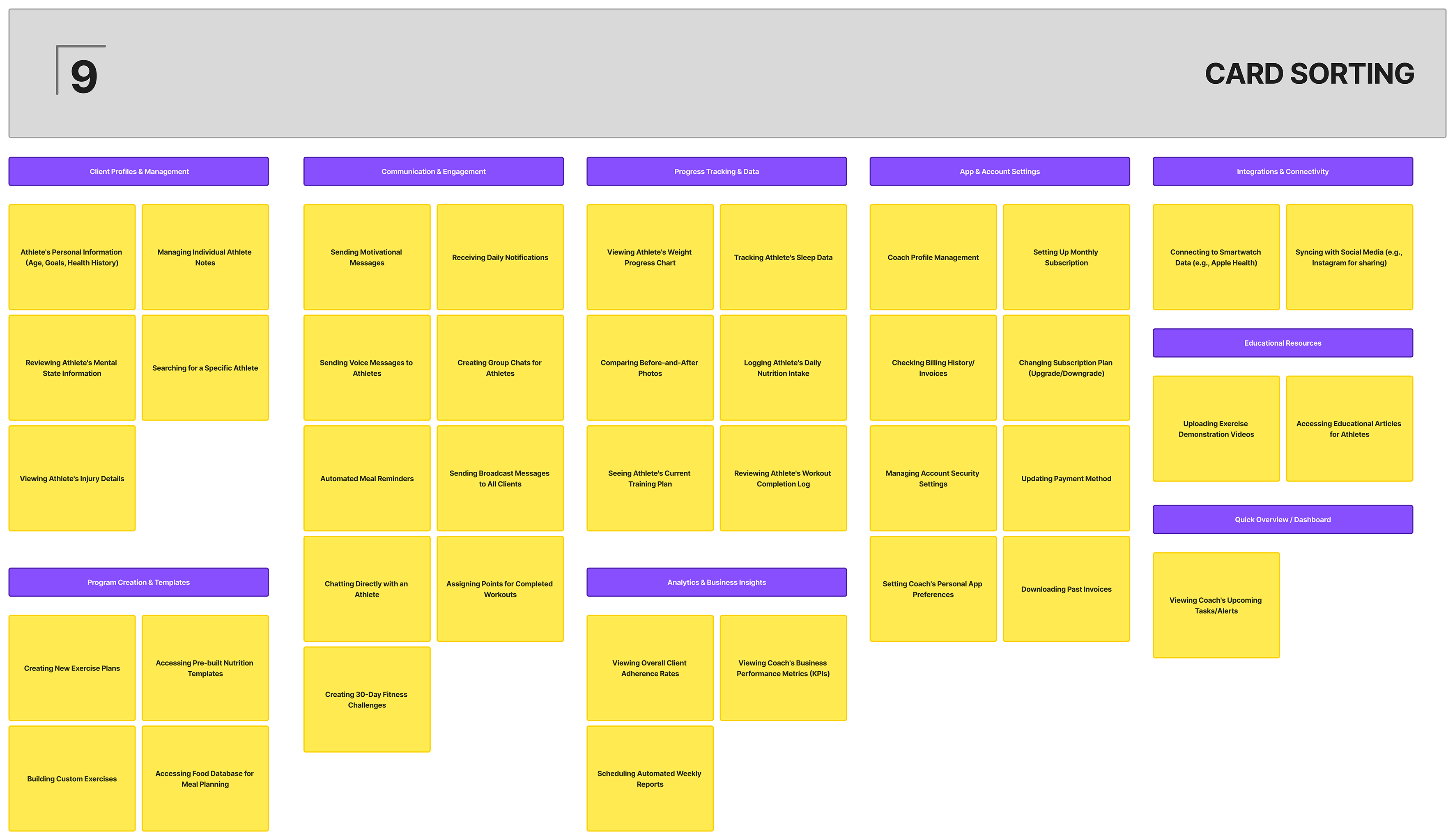
Card sorting results used to identify natural feature groupings and inform the app’s navigation structure.
A snapshot of the research and foundational design work behind the Sport Coach Assistant App, including problem framing, user insights, personas, IA, flows, card sorting, and early sketches.
discovery phase is still evolving, and like any UX project, it continues to iterate as new insights emerge.
A high‑level overview of the design system created for the Sport Coach Assistant App, showcasing the visual foundations including design tokens, color palette, typography, and core UI components

A progression of wireframes from low to high fidelity, illustrating how the Sport Coach Assistant App’s structure, interactions, and visual direction took shape through iterative design.
The current prototype is still evolving, reflecting an ongoing UX process where flows, layouts, and interactions continue to be refined based on feedback and new insights.

A consolidated view of the Sport Coach Assistant App’s design evolution, including the design system, low‑fidelity wireframes, mid‑fidelity layouts, and high‑fidelity interactive prototype.
Although this is a conceptual project currently in the mid-fidelity testing phase, I conducted validation sessions with 5 of the original 10 interviewed coaches using the interactive prototype.
Key Validation Findings:
> Feedback confirmed that the unified dashboard and program builder successfully reduced the perceived complexity of client management.
> Based on their experience with the prototype, coaches estimated the app would save them 2+ hours per week in administrative tasks, affirming the viability of the paid subscription model identified in the initial survey.
My Next Steps for Iteration:The next phase involves refining the integrated analytics dashboard based on testing feedback and focusing on A/B testing the primary onboarding flow to ensure minimal drop-off before moving to high-fidelity design.
Bridging the gap between high-fidelity prototypes and final deployment.
My foundation in Front-End Development is not a secondary skill; it's a core strategic tool. Through focused training, including the Front-end with React bootcamp at Quera College, I gained the technical fluency necessary to design solutions that are not only beautiful and user-friendly, but also technically optimized, scalable, and efficient to deploy, significantly reducing technical debt and streamlining design handoffs.
During the course, we did a lot of hands-on work, but we had two main projects which were a personal portfolio website and a team-based e-commerce platform.
In this team project, I utilized a React component-based structure (Components, Hooks, States) to ensure the design system was modular and scalable for the development team. I leveraged GitHub for version control and focused on creating design deliverables that translated to a clean, maintainable codebase, optimizing the design-to-development handoff.
React, Router, Zustand, and Shadcn UI (Focus on frameworks that enable efficiency).
![[background image] image of topdown photo of desk with laptop (for a food and agtech)](https://cdn.prod.website-files.com/6886e306c66e32973bb77f05/6938cac978ddd3f9535deace_code.jpg)
I executed the design and front-end development of a personal portfolio, providing a clear understanding of the challenges and limitations involved in translating high-fidelity design into code. This process strengthened my ability to create developer-ready specs and optimized visual assets for production.
HTML, CSS, TailWind CSS
![[modern tech interface]](https://cdn.prod.website-files.com/6886e306c66e32973bb77f05/69333bfde57c458083e2a7ec_portfoliopic.jpg)
My expertise spans both digital products and real-world spatial events. Explore the planning, design, and execution of my trade shows, conferences, and experiential projects.
